
Why Sneaking Away at Preschool Backfires: The Goodbye Your Child Actually Needs
Quick Takeaways
Sneaking away increases separation anxiety, not decreases it
A predictable goodbye routine helps children transition faster and feel more secure
Children cry less when drop-off follows the same sequence every day
Teachers and parents need to use the same language about goodbye and return time
The goal is not to avoid tears—it's to build trust in your reliability.

The Scenario You're Living
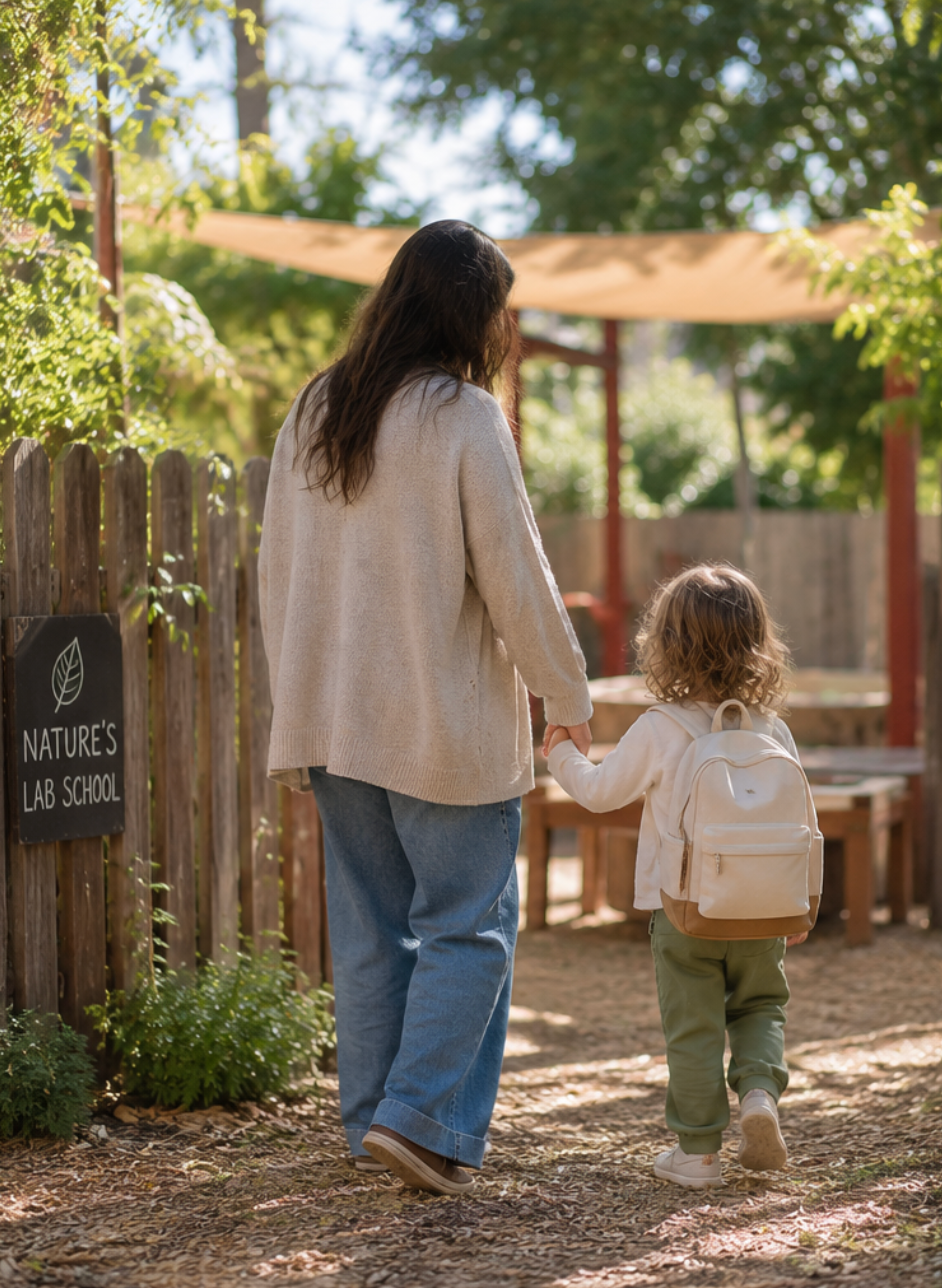
You're standing at the doorway of the classroom or daycare, and your child is crying. Not small tears—the kind that makes your chest tight and your instinct kick into overdrive.
You think: If I just slip out quietly while they're playing, they won't notice. They'll stop crying. It will be easier.
So you sneak away.
I understand that impulse completely. After years of working with preschool-aged children, I've watched this pattern unfold countless times. But here's what happens next—and why a different choice builds the trust and security your child actually needs.
Why Sneaking Away Makes Separation Anxiety Worse
When you sneak away, your child learns something critical: goodbyes are unpredictable.
They can't see you leaving. They have no warning. One moment you're there, the next you're gone—and they didn't get to say goodbye. They don't know when you're coming back.
From your child's nervous system's perspective, this is scary. It teaches them that the world is unreliable.
The research is clear: Separation anxiety is a sign of healthy attachment, not a problem to solve. Zero to Three and the Harvard Center on the Developing Child both confirm that when a child cries at drop-off, they're showing you they have a secure bond with you. That's good.
But sneaking away undermines it. It turns that secure bond into a source of anxiety because your child learns: My parent disappears without warning. I can't predict when they'll be gone. I can't trust what they say.
What builds real security is the opposite: a clear goodbye, followed by your actual return at the time you said you would.
When this happens consistently, your child's nervous system learns: My parent keeps their word. Even when I'm sad, I'm safe.
The Goodbye Routine That Actually Works
Here's what we see at Nature's Lab School: when parents and teachers work together on a consistent, predictable goodbye routine for preschool dropoff, children transition faster and cry less.
Not eventually—within days.
How to Build Your Goodbye Routine
Before you arrive at school, tell your child the sequence:
"When we get to school, we're going to:
Unpack your lunch
Find Ms. Sarah
Mommy will give you a hug
I'll say, 'I'm coming back after snack time.'
Then Mommy/Daddy will go."
You're not being vague. You're not hoping they won't notice. You're telling them exactly what's about to happen.
At dropoff, follow that sequence every single day:
Unpack the lunch (same way)
Find the teacher (same person or location)
Hug (warm, brief)
Clear goodbye statement ("I'm coming back after snack time")
Leave (don't linger, don't re-enter)
Then come back at the time you said. Not five minutes later. Not an hour later. Snack time. Every single time. Your child's nervous system learns through experience that what you said comes true.
What happens:
Tears stop faster
Transitions to play happen faster
Your child builds confidence: "My parent keeps their word."
Why Teacher-Parent Alignment Matters
This only works if you and your child's teacher are on the same page.
If you sneak away but the teacher does consistent goodbyes, your child gets mixed messages. If the teacher sneaks away, but you do a clear goodbye, same problem.
Talk to your teacher about:
Your goodbye routine at home
What they say during separation anxiety
The specific return-time language you use
How do they reinforce the routine
We consistently observe at Nature's Lab that when teachers and parents align on goodbye language and follow-through, children's anxiety drops noticeably within the first week. When adults send mixed messages, children stay dysregulated longer.
When your child hears the same goodbye sequence and the same return-time promise from both adults, they learn: The adults in my life keep their word. I can trust what they say.
The Emotional Piece: Why Parents Sneak Away
Here's something important: many of you sneak away because your parents did. You learned early that to keep a caregiver present, you had to perform a certain way—be happy, be entertaining, don't cry.
I had a conversation with a parent recently. She realized: "I remember knowing that if I started playing, my parents wouldn't go away. But inside, I felt anxious. And now, as an adult, I struggle with trust."
She was recognizing how that early lesson—don't show your real feelings or people will leave—had shaped her as an adult.
If that resonates with you: You're not broken. You're carrying a pattern forward because that's what you learned about safety. But you have the power to break it with your child.
You can show them that real goodbyes—clear, warm, honest—are actually safe. That their big feelings don't scare you away.
That's one of the most powerful gifts you can give.
The Bottom Line: Build Trust, Not Avoidance
Those tears at preschool dropoff are real and important. Don't avoid them—sit with them. Show your child that you can handle their sadness.
Then say goodbye. Follow through on when you'll be back. And leave.
That 30-second goodbye with tears, followed by your reliable return, builds more security than any amount of sneaking ever will.
Your child doesn't need you to make the pain go away. They need to know that you don't go away.
That's trust. That's what lasts.
FAQ: Preschool Dropoff and Separation Anxiety
Is it bad to sneak away at preschool drop-off?
Yes. Sneaking away teaches your child that goodbyes are unpredictable and that they can't trust what you say. It actually increases separation anxiety and erodes the secure attachment you're trying to build. A clear goodbye, followed by your reliable return, is what builds real security.
How long should my child cry at preschool drop-off?
Every child is different, but when you establish a consistent goodbye routine, most children cry less within 3–5 days and transition much faster within 1–2 weeks. If crying continues for more than 2–3 weeks or intensifies, talk to your teacher about whether there's something else going on.
What should teachers say when my child cries at separation?
Instead of "Don't worry, Mommy will be back soon," teachers should reinforce the specific promise: "Your mom said she's coming back after snack time. I know you miss her. Let's look at the clock." This is fact-based and gives your child something concrete to hold onto.
Why does my child cry more after I sneak away?
When you sneak away, your child's nervous system learns that goodbyes are scary and unpredictable. They may cry more because they're learning to panic when they realize you're gone. A consistent, predictable goodbye actually teaches them to feel safe, which reduces crying over time.
What's the best goodbye routine for preschool separation anxiety?
The best routine is one that:
Happens in the same order every day
Includes specific language about when you're coming back
Is brief (not lingering)
Is followed by you actually returning at the time you said
Is reinforced by your child's teacher using the same language and approach
Should I stay longer at dropoff if my child is crying?
No. Staying longer teaches your child that crying gets you to stay, which reinforces the anxiety. Keep the goodbye brief and consistent. Your presence during a difficult transition is what builds security—your ability to follow through and leave is what teaches trust.
What if my child gets more upset when I say goodbye?
That's normal and temporary. When you switch from sneaking away to a clear goodbye, your child may cry harder for a few days because they're learning a new pattern. Stay consistent. Within a week or two, they'll cry less because they're learning that goodbyes are predictable and that you actually come back.
How does co-regulation help with dropoff transitions?
Co-regulation means you stay calm while your child is upset. Your nervous system helps regulate theirs. When you say goodbye calmly and confidently, your child learns that separation is manageable. Panic, hesitation, or anxiety from you teaches them that something is wrong. Stay calm, warm, and clear.
What if my child's teacher doesn't follow the same goodbye routine?
This is crucial to address. Schedule a conversation with your teacher. Explain your routine and ask what they do at dropoff. Work together to align on language, timing, and follow-through. Mixed messages confuse children and prolong anxiety. Alignment is what creates security.
How does this relate to other transitions (moving, new sibling, kindergarten)?
All transitions are easier when children know what to expect and can trust adults to follow through. The goodbye routine is practice for bigger transitions. When your child learns "my parent says something and does it," they develop confidence for kindergarten, new environments, and life changes.
Ready to Try a Different Approach?
If you're currently sneaking away at preschool dropoff, making this shift takes courage. Your child may cry for a few days while they learn the new routine. That's normal.
But soon—and I mean soon—you'll see a transformation. Your child will transition faster. They'll cry less. And underneath it all, they'll be building something deeper: the knowledge that they can trust you.
That's what you're actually doing.
Related articles you might find helpful:
Co-Regulation and Emotional Development: How Calm Adults Build Resilient Kids
Kindergarten Readiness: What Actually Predicts Success (Spoiler: Not Early Reading)
Understanding Separation Anxiety: When It's Normal and How to Support It


